

Enquire Now

Uncategorized

blog 1 image

Maharashtra Nursing Council Guidelines for ANM, GNM & B.Sc Nursing

Knowing the requirements of the Maharashtra Nursing Council is one of the initial steps if you are planning to start a nursing college in Maharashtra or want to expand your nursing college. These are not only guidelines for obtaining approvals but also for building a learning environment where students can acquire theoretical and practical knowledge. In recent years, the nursing field has become more competitive, and nursing colleges are required to have modern labs, highly experienced teachers, and appropriate clinical training facilities. Whether you are running ANM, GNM, or B.Sc., following the standards, future courses of Nursing can help your institution establish credibility and offer better opportunities to students. Overview of Nursing Education Rules in Maharashtra Running a nursing college involves much more than classrooms and textbooks. Students need practical exposure, hands-on training, and guidance from experienced educators. That’s why nursing education regulations focus on every aspect of the learning experience. From infrastructure and faculty appointments to laboratory facilities and hospital tie-ups, institutions must meet specific requirements before they can admit students. These standards help ensure that future nurses are ready to handle real-world healthcare responsibilities with confidence. ANM Program Requirements The ANM (Auxiliary Nurse Midwife) course is often the first step for students who want to build a career in healthcare. The program focuses on community health, maternal care, child health services, and basic nursing practices. For colleges offering ANM courses, providing practical learning opportunities is just as important as classroom teaching. Students should have access to nursing labs, demonstration equipment, and community-based training programs. This helps them understand how healthcare services are delivered at the grassroots level. A well-planned ANM program prepares students to support public health initiatives and serve communities effectively. GNM Program Guidelines GNM (General Nursing and Midwifery) is one of the most popular nursing programs because it combines academic learning with extensive clinical training. Students are expected to develop strong patient care skills while gaining experience in different healthcare settings. To support this learning process, institutions should maintain nursing laboratories, library facilities, and affiliations with hospitals where students can complete their clinical training. Exposure to medical, surgical, pediatric, and maternity departments helps students gain confidence before entering professional practice. Many healthcare employers value GNM graduates because of their strong practical foundation and hands-on experience. B.Sc Nursing Approval Standards B.Sc Nursing is a professional degree program designed for students who want deeper knowledge of healthcare, patient care management, and nursing leadership. Because of the advanced nature of the course, colleges need to provide modern educational facilities and quality clinical exposure. Students learn everything from anatomy and physiology to community health nursing and research methodologies. The program also focuses on developing critical thinking and decision-making skills, which are essential in today’s healthcare environment. Graduates often have broader career opportunities in hospitals, educational institutions, and healthcare organizations. Infrastructure and Approval Requirements Before granting recognition to a nursing institution, the Maharashtra Nursing Council reviews whether the college has the facilities needed to deliver quality education. A nursing college should have well-ventilated classrooms, functional laboratories, library resources, and access to clinical training hospitals. Students learn best when they can practice procedures in a simulated environment before performing them in real healthcare settings. Institutions that invest in proper infrastructure not only meet regulatory requirements but also create a better learning experience for students. Faculty Requirements Behind every successful nursing college is a team of qualified educators. Faculty members play a crucial role in helping students understand complex concepts and develop practical skills. Experienced teachers bring real-world healthcare knowledge into the classroom. They guide students during laboratory sessions, clinical postings, and academic projects. Having an adequate number of faculty members also ensures that students receive the attention and support they need throughout their education. Importance of Nursing Laboratories Nursing is a practical profession, which means students learn best by doing. This is where nursing laboratories become extremely important. Before treating actual patients, students must practice procedures repeatedly in a controlled environment. Nursing labs provide opportunities to learn skills such as patient assessment, injection techniques, CPR, wound care, and emergency response. Modern laboratories equipped with training manikins and simulation models help students build confidence while reducing the risk of mistakes during clinical practice. Student Admission Eligibility Admission criteria vary depending on the course being offered. Students applying for ANM programs generally need to complete higher secondary education and meet the prescribed age requirements. For GNM courses, candidates must satisfy the academic qualifications specified by nursing education authorities. Students seeking admission to B.Sc Nursing programs are usually required to complete their higher secondary education with Physics, Chemistry, Biology, and English subjects. Institutions may also follow additional admission procedures based on current regulations. Conclusion Setting up a successful nursing lab institution requires careful planning, quality infrastructure, experienced faculty, and good clinical training support. Today’s students demand a learning experience that prepares them for today’s health-care realities, and colleges need to be ready to deliver. Following the guidelines and requirements of the Maharashtra Nursing Council allows institutions to establish a solid foundation for nursing education and contribute to the development of competent healthcare providers in the future.

Maharashtra Nursing Council Guidelines for ANM, GNM & B.Sc Nursing Read More »

Blog 2 image

Basic vs Advanced Medical Training Manikins: Which One is Best for Nursing Colleges?

Deciding on the correct Medical Training Manikins is an important choice for any nursing college. There exists a lot of confusion among many principals and management teams while planning a nursing lab setup. Some colleges buy only basic models, and some others buy advanced simulation systems, without understanding actual training needs. The right choice of manikins depends on your nursing courses, student strength, practical sessions, and budget. A good nursing lab should help students practice confidently and also support daily training according to inc lab requirements. Basic Manikins for Everyday Practical Training Basic Nursing training manikins are mainly used for regular nursing procedures and beginner-level practice. The models are simple, easy to use, and suitable for everyday use in the classroom for demonstration purposes.  Most nursing colleges use them for: Injection practice Patient care training Bed making Feeding procedures Dressing practice Catheterization Basic CPR training These manikins are commonly used in GNM and ANM nursing colleges because students need repeated practice for daily nursing procedures. Why Many Colleges Choose Basic Manikins Lower investment Easy maintenance Good for large student batches Suitable for daily practical classes Helpful for foundation nursing labs For colleges starting a new nursing lab setup, basic manikins are often the first choice. Advanced Manikins for Better Clinical Exposure Advanced manikins are used when colleges want students to experience more realistic patient-care situations. These models help students understand emergency care, ICU practice, and advanced nursing procedures before hospital training. Advanced simulators may include: Pulse system Breathing sounds Heart sounds IV practice Emergency response training Trauma care simulation Drug administration practice These systems are mostly preferred by B.Sc Nursing colleges and institutions planning modern nursing labs. Why Colleges Invest in Advanced Manikins Better practical exposure Realistic clinical training Improved student confidence Useful for advanced nursing programs Supports simulation-based learning Many colleges now upgrade their labs with advanced manikins to improve practical learning quality. Simple Difference Between Basic and Advanced Manikins Features Basic Manikins Advanced Manikins Cost Affordable Higher Cost Usage Daily Nursing Practice Clinical Simulation Technology Manual Computer-Based CPR Practice Basic Advanced Emergency Training Limited Available Maintenance Easy Needs Support Best For GNM & ANM Colleges B.Sc Nursing Colleges This simple comparison helps principals choose the right manikins according to college requirements. Which One Should You Choose? If your college mainly focuses on regular nursing procedures and basic practical sessions, then basic manikins are usually enough. They are affordable and suitable for everyday training. But if your college wants students to practice: Emergency care ICU procedures Critical patient handling Advanced clinical situations Then, advanced medical training manikins are a better option. Many nursing colleges now use both types together. Basic manikins are used for routine practice, while advanced simulators are used for special practical training sessions. This setup helps colleges balance budget and practical learning needs while supporting INC Lab Requirements. Things Principals Should Check Before Buying Before purchasing manikins, colleges should check: Student Strength Large batches need multiple practice models. Nursing Courses GNM and B.Sc Nursing programs may need different types of simulation equipment. Budget Advanced simulators require a higher investment. Practical Training Needs The manikins should support procedures included in the nursing syllabus. After-Sales Support Maintenance and service support are important for long-term use. Why Modern Nursing Colleges Are Upgrading Their Labs Today, hospitals expect nursing students to have practical confidence before internships. Because of this, many institutions are improving their nursing labs with better manikins. Simulation-based practical training helps students: Practice repeatedly Improve patient handling Build confidence Understand clinical situations better This is why many nursing colleges are investing in modern lab setups according to updated inc lab requirements. Final Thoughts Basic and advanced medical training manikins are essential for nursing training. The best choice will be based on your college’s courses, practical objectives, and budget. Simple manikins can be used in daily nursing practice, and the clinical simulation and realistic patient-care training are enhanced by the advanced manikins. These two systems are combined in many colleges to make a full-fledged Nursing Skills lab, which helps students to acquire the skills more effectively in practice.

Basic vs Advanced Medical Training Manikins: Which One is Best for Nursing Colleges? Read More »

Blog 3 image

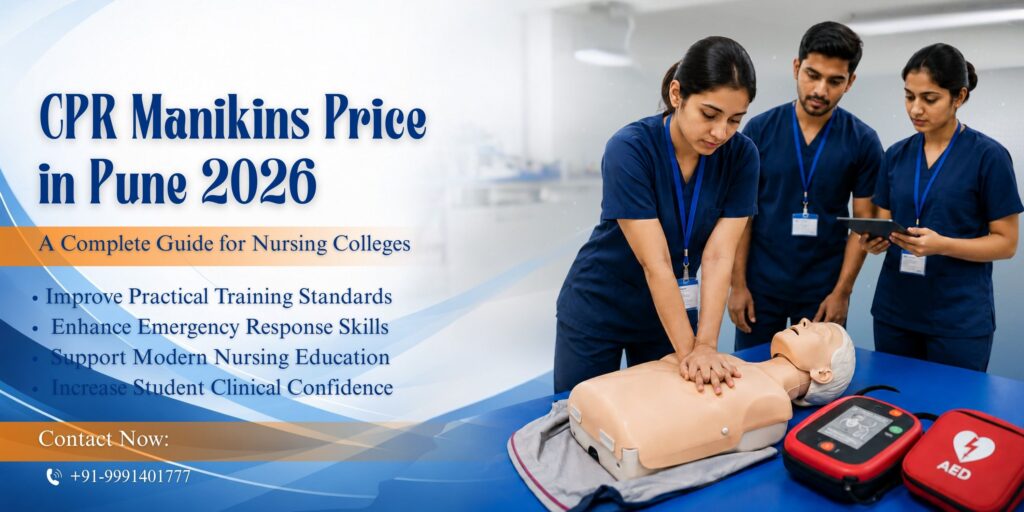
How Much Do CPR Manikins price in Pune in 2026? Complete Guide for Colleges

Pune has become one of the premier education centers for nursing and the healthcare field in India. As the number of nursing colleges, paramedical institutes, and healthcare universities grows in the city, the need for infrastructure to enable practical training is becoming a priority in 2026. Nowadays, nursing principals, HODs, and lab coordinators are more interested in simulation-based education to enhance students’ emergency response abilities and clinical confidence. For this reason, many institutes are actively comparing the latest CPR Manikins Price in Pune before upgrading the skill lab of nursing. CPR Training Becoming Essential for Pune Nursing Institutes Nursing colleges across Pune are introducing advanced practical sessions for: Basic Life Support (BLS) Emergency cardiac response Airway management AED training Trauma response practice This growing focus on hands-on learning has increased the demand for modern CPR simulation systems across the city. Many institutions are also upgrading their labs according to current healthcare education standards and simulation-based learning requirements. The CPR practice solutions support nursing colleges with realistic emergency response training equipment designed for healthcare education. CPR Manikins Commonly Used in Pune Nursing Colleges Different nursing institutes in Pune select CPR manikins according to training objectives, student strength, and practical learning requirements. Basic CPR Practice Models Basic CPR manikins are generally used for: First-year nursing students Introductory CPR sessions First-aid awareness training Basic emergency response practice These models usually include manual chest compression practice systems and standard airway structures. Mid-Range CPR Training Systems Many nursing colleges in Pune prefer mid-range models because they provide better durability and improved practical experience during daily lab sessions. These manikins may include: Compression feedback indicators Replaceable lungs Anatomical landmarks Audible click systems Better-quality skin material Mid-range models are suitable for regular practical training and clinical skill development. Advanced CPR Simulation Systems for Modern Nursing Labs Advanced healthcare institutes and large nursing colleges are increasingly investing in digital CPR simulation systems to improve practical learning quality. Advanced models may offer: Real-time performance monitoring Bluetooth-enabled instructor systems AED simulation compatibility Compression depth analysis High-fidelity emergency simulation Interactive training feedback These systems are becoming more popular among Pune nursing colleges that want to provide realistic healthcare training environments. CPR Manikins Price in Pune in 2026 The overall CPR Manikins Price in Pune depends on several important factors, including technology integration, realism, durability, and simulation features. Entry-Level CPR Models Basic training manikins are generally more affordable and suitable for beginner-level practical sessions. Mid-Range Institutional Models These models offer improved durability and better simulation quality for regular nursing lab use. Advanced Digital CPR Simulators High-end simulation systems designed for modern nursing institutes usually include advanced monitoring technology and realistic emergency response features. Institutions in Pune often compare: Long-term usability Student training quality Maintenance requirements Simulation realism Faculty monitoring systems before finalizing CPR training equipment for their laboratories. Factors Affecting CPR Equipment Cost in Pune Simulation Technology Advanced digital systems and real-time performance feedback increase equipment pricing. Type of CPR Manikin Adult, child, and infant CPR models have different clinical training purposes and cost structures. Durability for Institutional Use Nursing colleges conducting regular practical sessions usually prefer heavy-duty models designed for long-term training. Practical Training Requirements Institutes focused on advanced emergency response training often invest in higher-quality simulation systems. Demand for CPR Training Manikins in Pune Is Growing Rapidly The demand for CPR Training Manikins in Pune is increasing because healthcare institutes are now prioritizing practical skill development alongside theoretical learning. Modern nursing colleges are focusing on: Clinical readiness Emergency response practice Skill-based education Simulation-focused learning Practical healthcare training Institutions with advanced nursing skills labs often provide better learning experiences for students preparing for hospital internships and clinical placements. Benefits of Advanced CPR Simulation Training for Nursing Students Regular CPR simulation practice helps students: Improve confidence during emergencies Learn accurate chest compression techniques Develop faster decision-making skills Understand patient-response situations Build practical clinical knowledge Simulation-based training also helps reduce fear and hesitation during hospital-based patient care procedures. Important Points Nursing Colleges Should Check Before Purchasing Before investing in CPR simulation equipment, Pune nursing institutes should compare: Student intake capacity Practical training frequency Simulation quality Ease of maintenance Availability of replacement parts Instructor monitoring support Long-term durability Selecting suitable CPR training equipment improves both practical learning quality and overall student performance. Practical Learning Trends in Pune Healthcare Education Healthcare education in Pune is moving rapidly toward: Smart nursing skills labs Digital simulation systems Interactive CPR training Advanced emergency response education High-fidelity healthcare simulation Many nursing colleges are now modernizing their laboratories to create stronger practical learning environments for future healthcare professionals. Conclusion As practical healthcare education continues to expand in Pune, CPR manikins have become essential equipment for nursing colleges and healthcare institutes. Understanding the latest trends in CPR Manikins Price in Pune helps principals, nursing teachers, and lab coordinators select suitable simulation systems according to institutional training goals and educational standards. From beginner-level practice models to advanced digital simulators, modern CPR training equipment supports better clinical learning, stronger emergency response skills, and improved student confidence. Nursing colleges investing in advanced practical training infrastructure can create more effective healthcare education environments and prepare students for real-world medical situations in 2026 and beyond.

How Much Do CPR Manikins price in Pune in 2026? Complete Guide for Colleges Read More »

blog 4 image

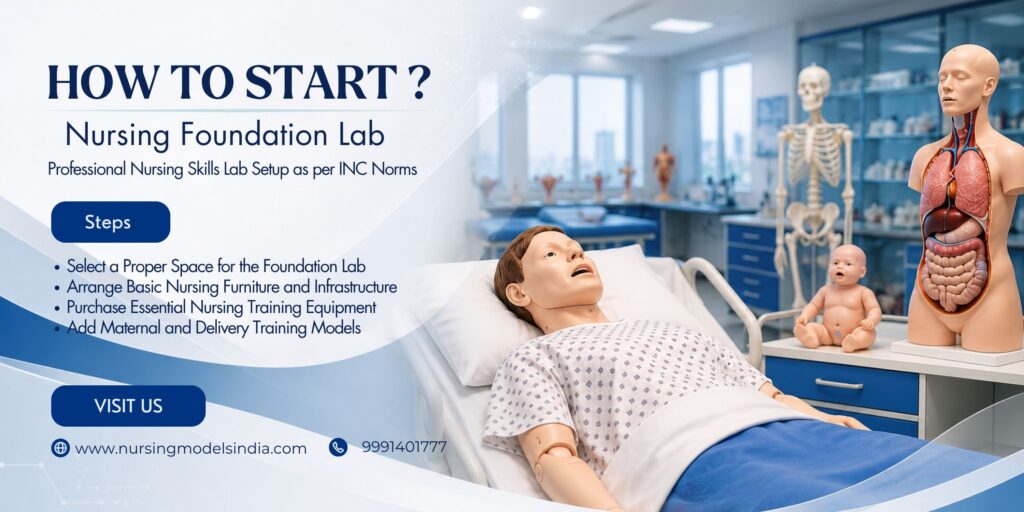
How to Start a Nursing Foundation Lab as per INC Norms

The nursing foundation lab is an important part of nursing education for students to learn practical skills before starting clinical training. According to INC guidelines, nursing colleges in Chennai must have enough lab setups for the students in which they can practice patient care procedures in a protected and supervised setup. Advanced Medical Training Manikins in Chennai are being adopted by various institutes to enhance their practical training infrastructure and adopt simulation-based nursing education for realistic skills training.  Step 1: Understand INC Requirements Before Planning the Lab It is Important for institutes in Chennai to first be aware of the INC guidelines before purchasing equipment or selecting a room. According to INC norms, a nursing foundation lab should support training for: Basic nursing care Bedside procedures Injection practice CPR training Patient monitoring Emergency care Maternal and child care basics The lab should provide enough space and proper facilities for group practical sessions. If these requirements are understood at an early stage, institutes will save money and avoid setup mistakes later. Step 2: Select a Proper Space for the Foundation Lab The space and size of the lab can have a significant impact on the learning experience of students. A crowded lab makes demonstrations and skill practice difficult to do. When choosing the space, be sure to include the following in the lab: Good ventilation Bright lighting Clean flooring Water supply access Storage cabinets sufficient space around beds Many nursing colleges in Chennai now prefer modern lab layouts that create a hospital-like learning environment for students. Step 3: Arrange Basic Nursing Furniture and Infrastructure Once the room is finalized, the next step is setting up the required furniture and infrastructure. Basic items include: Hospital beds Bedside lockers Patient screens Demonstration tables Chairs and stools Instrument storage racks Wash basins Proper furniture arrangement improves the flow of practical sessions and makes demonstrations easier for teachers. Step 4: Purchase Essential Nursing Training Equipment Equipment selection is one of the most important parts of setting up a nursing foundation lab. Students need hands-on practice for various nursing procedures. Important training equipment includes: BP apparatus Stethoscopes IV stands Suction machines Dressing sets Catheterization trainers CPR manikins Injection practice arms Modern nursing institutes are also investing in simulation-based learning tools. Advanced Medical Training Manikins in Chennai are now widely used because they help students practice realistic clinical situations safely. These manikins improve skill development and help students gain confidence before working with real patients. Step 5: Create Separate Sections for Different Nursing Skills A properly organized lab improves practical learning. Instead of placing all equipment randomly, institutes should divide the lab into different skill sections. Common sections include: Basic Nursing Care Area For bed making, patient positioning, and vital signs training. Emergency Care Section For CPR practice and emergency response demonstrations. Injection and Procedure Area For IV practice, injections, and dressing techniques. Maternal Nursing Section For pregnancy and childbirth-related training. This structured arrangement helps students learn procedures more effectively. Step 6: Add Maternal and Delivery Training Models INC-approved nursing programs also require practical exposure to maternal healthcare training. For this purpose, institutes should include: Pregnancy models Infant care trainers Delivery simulation models Newborn care equipment Using obstetric manikins helps students understand labor procedures and maternal nursing care more practically. Many nursing colleges in Chennai also include a labor and delivery mannequin for childbirth demonstrations and emergency delivery training. These models provide realistic practice opportunities for nursing students. Step 7: Choose Reliable Suppliers for Better Quality Equipment The quality of training equipment directly affects the learning experience of students. Cheap or low-quality models often get damaged quickly and fail to provide realistic training. While selecting equipment suppliers, institutes should check: Product durability Warranty support Simulation features Technical assistance Industry experience Working with experienced Nursing Manikin Suppliers in Chennai helps colleges get proper guidance for complete nursing lab setup solutions. Reliable suppliers also help institutes choose products according to INC standards and nursing course requirements. Step 8: Focus on Hygiene and Safety Standards A nursing foundation lab should maintain proper hygiene and safety practices at all times. Important safety arrangements include: Hand sanitization stations First aid kits Fire safety equipment Medical waste disposal bins Regular equipment cleaning Students should also be trained in infection control practices during every practical session. Step 9: Appoint Skilled Nursing Faculty for Practical Training Even the best nursing lab cannot function properly without experienced faculty members. Teachers should guide students through: Live procedure demonstrations Step-by-step practical training Error correction during practice Patient communication techniques Clinical discipline and ethics Regular supervision and practical assessments help students improve faster. Step 10: Upgrade the Lab Regularly Healthcare education is changing fast, and nursing institutes in Chennai should regularly update their labs with modern training tools. Adding advanced simulation systems and updated nursing trainers improves the quality of education and keeps the institute aligned with modern healthcare standards. Institutes using advanced Medical Training Manikins in Chennai are often able to provide better clinical preparation and practical exposure to students. Final Thoughts The establishment of a nursing foundation lab with INC standards involves quality equipment, faculty, and organized practical training, as well as planning. The process from choosing the appropriate space to advanced simulation models is very important to the students’ learning. Working with trusted Nursing Manikin Suppliers in Chennai can help nursing colleges build a complete and modern training environment. Using obstetric manikins and childbirth simulation tools also further reinforces maternal healthcare education and helps students to be more prepared and confident in real clinical situations.

How to Start a Nursing Foundation Lab as per INC Norms Read More »

Blog 5 image

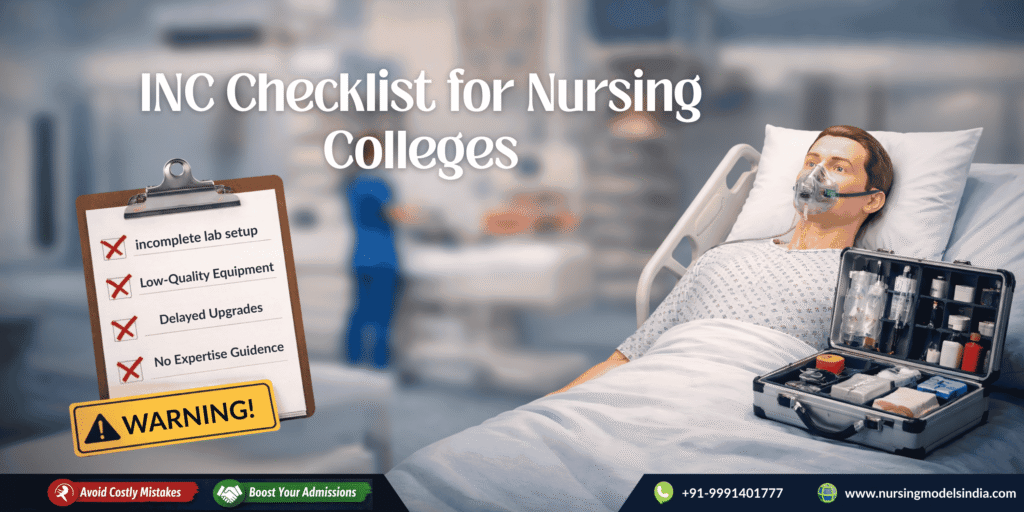
INC Checklist for Nursing Colleges: Avoid These Costly Errors

Setting up a nursing college in 2026 is not just about meeting basic requirements—it’s about delivering quality education while staying fully compliant with Indian Nursing Council (INC) standards. Many institutions fail to meet these guidelines due to common mistakes, leading to rejected approvals, poor training quality, and financial losses. These errors will save time and money in case you are intending to construct or upgrade your institute.  A well-planned Nursing Skills Lab Setup in Mumbai is one of the most critical steps in ensuring compliance and attracting admissions. Why INC Compliance is Directly Linked to Your Revenue Most colleges overlook one important fact—INC compliance directly impacts admissions and reputation. Students prefer institutes with modern labs, proper equipment, and strong clinical exposure. If your college fails to meet standards: Admissions drop Approval risks increase Reputation suffers On the other hand, a fully compliant setup helps you position your institute as a premium choice. Costly Mistake #1: Incomplete or Poor Lab Setup A nursing skills lab is the heart of practical training. However, many colleges either delay the setup or compromise on essential components. A proper nursing skills lab setup in Mumbai should include: Advanced patient simulators CPR and IV training models Hospital-grade beds and accessories Procedure-specific training kits  Sales Insight: Colleges that invest in complete lab solutions attract more students and recover costs faster through increased admissions. Costly Mistake #2: Investing in Low-Quality or Non-Compliant Equipment An attempt to save money by buying poor-quality equipment usually results in increased expenses in the long-term. Repeated changes, ineffective training, and unsuccessful inspections may tarnish the reputation of your institution. Choosing trusted nursing manikin suppliers in Mumbai ensures: Long-lasting equipment Realistic training experience Better student performance  Smart Move: One-time investment in quality equipment = long-term savings + better ROI Costly Mistake #3: Setting Up Without Professional Expertise Most colleges do not plan well or consult professionals before establishing labs. The result is a lack of equipment, incorrect layout, and not meeting the standards of INC.  Solution: Always follow a structured setup plan or consult professionals who understand INC requirements. A ready-to-deploy lab solution can save months of effort. Costly Mistake #4: Ignoring Practical Training Quality Even with equipment, poor training execution reduces the effectiveness of the lab. Students need hands-on practice in a realistic environment to build confidence. Institutes that focus on quality training: Produce skilled nurses Gain better placement results Build a long-term reputation Costly Mistake #5: Delayed Upgrades and Maintenance Outdated labs and poorly maintained equipment are major red flags during inspections. Regular updates are essential to match current standards.  Pro Tip: Schedule periodic upgrades and ensure all equipment is in working condition before inspections. How a Smart Investment Can Boost Your College Growth Instead of treating INC compliance as an expense, successful institutions see it as an investment. A well-equipped lab helps you: Increase student intake Improve training quality Build trust with hospitals and recruiters Stand out from competitors This is the reason why complete lab set-ups are being chosen by many colleges as opposed to handling each one independently of the other. Why Choosing the Right Partner Matters Your equipment and setup partner play a crucial role in your success. From planning to execution, having the right support ensures smooth compliance and better results. A reliable partner can help you with: Complete lab setup planning High-quality manikins and equipment Installation and support Guidance as per INC standards  Not only will this method save time, but you will be able to focus on other responsibilities of your institute without having to be stressed that your institute is going to be inspected. Final Takeaway: Avoid Mistakes, Maximize Growth INC guidelines are not barriers—they are opportunities to build a strong and successful nursing institution. Avoiding common mistakes in lab setup, equipment selection, and training can significantly improve your outcomes. Focusing on a professional nursing skills lab setup in Mumbai allows your institute to meet standards while creating a modern learning environment. At the same time, working with experienced nursing manikin suppliers in Mumbai ensures you get reliable, high-performance equipment that supports long-term growth.

INC Checklist for Nursing Colleges: Avoid These Costly Errors Read More »

nursing-manikin-suppliers-in-karnataka

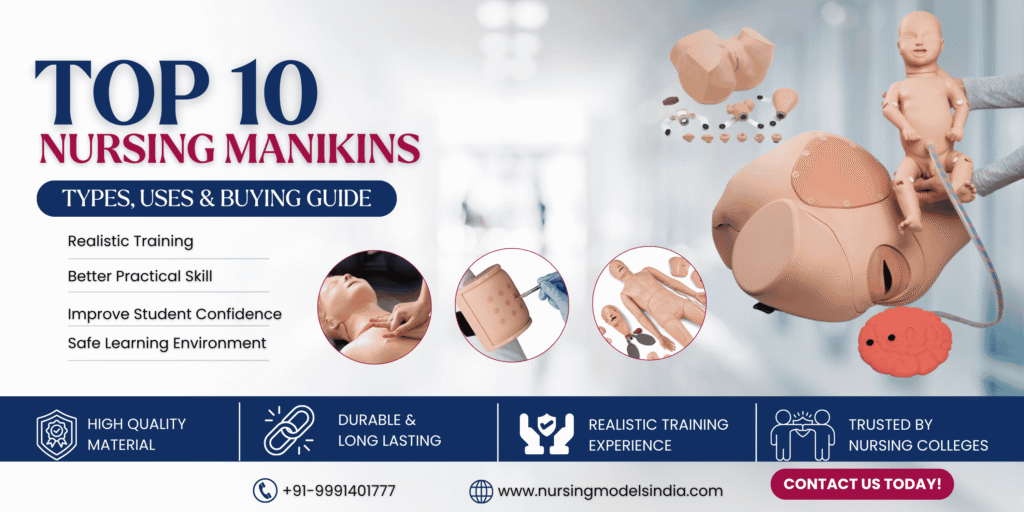
Top 10 Nursing Manikins Every College Must Have (Types, Uses & Buying Guide)

Walk into any modern nursing college today, and you’ll notice one thing immediately—students aren’t just learning from books anymore. They’re practicing, making mistakes, and improving… all without risking a patient’s life. That’s the power of simulation. And at the heart of it are nursing manikins. If you’re planning to upgrade your skills lab, choosing the right equipment is critical. Many institutes now prefer working with trusted Nursing Manikin Suppliers in Karnataka to ensure quality, durability, and realistic training experience. But with so many options available, which manikins are actually worth investing in? Let’s break it down in a simple, practical way. Why Nursing Manikins Are No Longer “Optional” Gone are the days when theory alone was enough. Today, nursing education is all about learning by doing. Manikins help students: Practice procedures again and again Build confidence before real patient interaction Understand real-life clinical scenarios Reduce the chances of errors in hospitals This is why many colleges are actively investing in Medical Training Manikins in Karnataka, as simulation labs are becoming a standard requirement rather than a luxury. Types of Nursing Manikins You Should Know Before jumping into the top models, let’s quickly understand the categories: Basic Manikins – Perfect for beginners (injections, dressing) Intermediate Models – For IV, catheterization, CPR practice Advanced Simulators – Realistic responses like breathing & pulse Specialized Models – Focused training (maternity, trauma, pediatrics) Each type serves a different purpose, so your selection should match your lab goals. Top 10 Nursing Manikins Every College Must Have 1. Full Body Nursing Care Manikin The backbone of any lab. Ideal for basic patient care like bathing, feeding, and positioning. 2. CPR Training Manikin A must-have for life-saving skills. Helps students master chest compressions and emergency response. 3. IV Injection Arm Designed with realistic veins, this model is perfect for repeated IV practice. 4. Female Nursing Manikin Used for gender-specific procedures like catheterization and maternity-related care. 5. Male Nursing Manikin Supports general nursing procedures and patient handling training. 6. Obstetric (Birthing) Manikin Essential for maternity training—students can learn labor and delivery safely. 7. Trauma Training Manikin Used for emergencies like wounds, fractures, and first aid practice. 8. High-Fidelity Patient Simulator The most advanced option. It can simulate breathing, pulse, and real-time patient reactions. 9. Injection Practice Pad Simple but highly effective for mastering injection techniques. 10. Pediatric Manikin Specially designed for infant and child care training, including CPR and emergency handling. Buying Guide: How to Choose the Right Manikin Not every expensive manikin is the right one. Here’s what actually matters:  Define Your Training Needs Start with basic models, then upgrade to advanced simulators.  Focus on Realism The more realistic the model, the better the learning experience.  Check Durability Lab equipment should last for years, not months.  Budget Smartly Mix basic + advanced models instead of overspending on one.  Choose the Right Supplier Reliable Nursing Manikin Suppliers in Karnataka can guide you better and provide after-sales support. What’s Trending in Nursing Labs? The future of nursing education is already here. Colleges are now adopting: Smart manikins with digital monitoring Simulation-based training rooms Scenario-based learning (real case practice) AI-powered patient simulators Because of this shift, demand for Medical Training Manikins in Karnataka is growing rapidly as institutions aim to stay ahead in healthcare education. Pro Tip for Colleges Instead of buying everything at once: Start with essential manikins Gradually upgrade to advanced simulators Focus on quality over quantity This approach saves cost while maintaining training standards. Conclusion A well-equipped nursing lab is not just about equipment—it’s about creating a real-world learning environment. The right manikins help students gain confidence, improve skills, and prepare for real clinical challenges. By partnering with trusted Nursing Manikin Suppliers in Karnataka, colleges can ensure they invest in reliable and long-lasting equipment. At the same time, the increasing adoption of Medical Training Manikins in Karnataka highlights how simulation is shaping the future of nursing education. In the end, the goal is simple:Better training → Better nurses → Better patient care.

Top 10 Nursing Manikins Every College Must Have (Types, Uses & Buying Guide) Read More »

latest-inc-norms-guidelines-for-nursing-lab-setup

Latest INC Norms & Guidelines for Nursing Lab Setup: Requirements, Equipment List

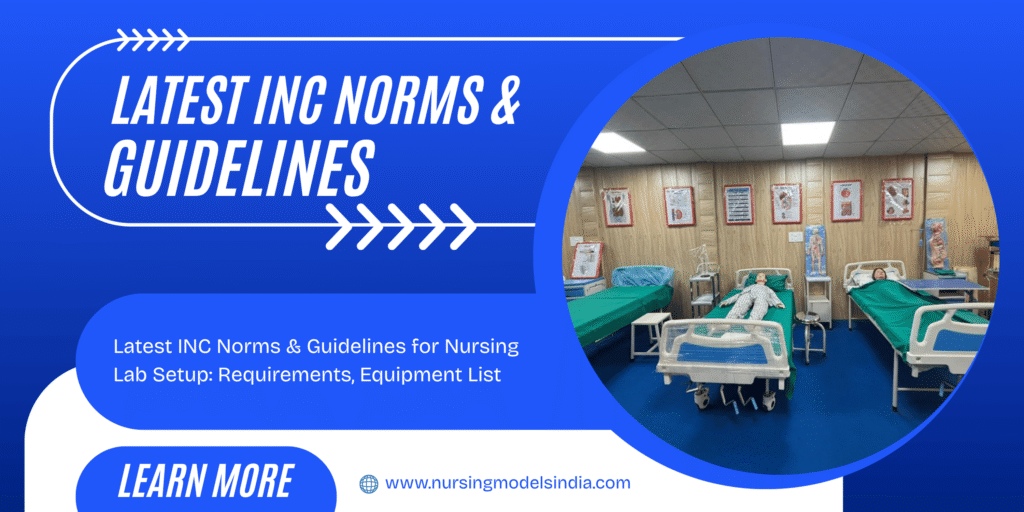
Setting up a nursing lab in India means following the standards set by the Indian Nursing Council. These rules make sure students get proper hands-on training in labs that are fully equipped and ready for real practice. Even though there aren’t completely new rules for 2026, colleges still need to follow the latest INC Norms and Guidelines  from recent years and focus more on modern training methods like simulation-based learning and better lab infrastructure. Understanding and applying these requirements is important to get approvals easily and stay compliant with the council norms. Overview of INC Norms for Nursing Lab Setup The Indian Nursing Council emphasizes practical, skill-based education. Nursing colleges must establish dedicated laboratories that simulate real clinical environments and support hands-on training. Key focus areas include: Functional and well-equipped labs Adequate space based on student intake Proper utilization of equipment during training Safe and compliant infrastructure Readiness for regular inspections Institutions must ensure that all facilities meet the prescribed inc lab requirements to avoid delays in approval. Mandatory Nursing Labs as per INC Guidelines To meet inc norms & guidelines, the following laboratories are essential: 1. Nursing Foundation Lab This is the primary training lab for basic nursing procedures. Essential Equipment: Adult mannequins (male and female) Hospital beds with bedside lockers and screens IV training arms and injection models Catheterization and enema sets Dressing and wound care models Vital signs monitoring equipment 2. Community Health Nursing (CHN) Lab This lab supports field-based and community healthcare training. Includes: Community health bags Home visit kits Sanitation and environmental models Audio-visual education materials 3. Nutrition Lab Used for diet planning and patient nutrition education. Equipment: Food models and charts Measuring tools and utensils Diet planning resources 4. OBG & Pediatric Nursing Lab Focused on maternal and child healthcare training. Key Equipment: Obstetric delivery simulators Pelvic models Newborn and infant mannequins Pediatric care training models 5. Pre-Clinical Science Lab Builds foundational knowledge in anatomy and microbiology. Includes: Human skeleton models Anatomical charts and organs Microscopes and slides Equipment Guidelines and Quantity Requirements As per Indian Nursing Council norms: Equipment must be adequate as per student strength Students should get hands-on access during practical sessions All items must be functional and well-maintained Outdated or non-working equipment is not acceptable Institutions are encouraged to adopt modern simulation tools to enhance learning outcomes and improve inspection performance. Infrastructure Requirements for Nursing Labs To meet inc lab requirements, colleges must ensure: Proper lighting and ventilation Safe electrical fittings Clean water supply Fire safety systems Organized and accessible lab layout Space Requirements The INC does not prescribe fixed sizes for all institutions. Instead: Lab space should be adequate based on student intake Each lab must be separate and clearly designated Overcrowding should be avoided Hospital Attachment Requirements Clinical training is a critical part of nursing education. As per Indian Nursing Council: Institutions must have access to a parent or affiliated hospital Bed strength typically ranges between 100 to 300 beds, depending on the course (GNM/BSc) and intake Hospitals must provide adequate clinical exposure to students Relaxations may be considered for institutions in rural or underserved areas. Lab Sharing Guidelines Labs may be shared between programs such as GNM and BSc Nursing under certain conditions: Labs must be located within the same campus/building Equipment should be sufficient for total student strength Proper scheduling must ensure equal access for all students Simulation and Modern Training Practices Although not mandatory in all cases, the Indian Nursing Council strongly encourages: Use of advanced mannequins Realistic clinical simulation setups Skill-based training modules Institutions adopting simulation-based learning are better prepared for inspections and deliver improved educational outcomes. General Compliance Requirements To fulfill inc norms and guidelines, institutions must also: Conduct regular practical sessions Maintain proper lab records and stock registers Ensure faculty supervision during training Keep equipment in working condition Stay prepared for periodic inspections Non-compliance may lead to rejection, penalties, or requirement of re-inspection. INC Inspection Checklist During inspections, the Indian Nursing Council evaluates: Availability and condition of lab equipment Adequacy of labs as per student intake Actual usage of labs during training Infrastructure and safety standards Clinical exposure through hospital attachment Proper planning and execution are crucial for successful approval. Importance of Following INC Norms Adhering to the lab requirements ensures: High-quality nursing education Better practical exposure for students Smooth approval and renewal process Strong institutional credibility Colleges that strictly follow the Inc guidelines are more likely to succeed in inspections and attract more students. Conclusion The inc norms and guidelines for nursing lab setup are designed to create a strong foundation for clinical education. While the core regulations remain consistent, institutions are expected to enhance their facilities with better infrastructure, sufficient equipment, and practical training focus. By aligning with the standards set by the Indian Nursing Council, nursing colleges can ensure compliance, improve training quality, and build long-term success in healthcare education.

Latest INC Norms & Guidelines for Nursing Lab Setup: Requirements, Equipment List Read More »

nutrition-lab-articles-list-as-per-inc-guidelines

Complete Nutrition Lab Articles List as per INC Guidelines (2026)

Every nursing college needs proper lab facilities for practical training. The Nutrition Lab Articles List as per INC helps institutions understand exactly what items are required to meet standards and run classes smoothly. Without the right articles, students cannot learn properly, and colleges may face problems during inspections based on inc lab requirements. A nutrition lab is used to teach students about food preparation, diet planning, and basic health practices. It should be simple, clean, and fully equipped so students can perform daily tasks with confidence. Why Nutrition Lab is Important A nutrition lab plays a key role in practical education. Students learn how to prepare balanced diets, understand food values, and manage patient nutrition in real situations. Main benefits include: Better practical knowledge Improved student confidence Clear understanding of diet planning Easy compliance with standards A well-maintained lab also supports overall nursing skills lab setup, making the institution more reliable and professional. Complete Nutrition Lab Articles List To follow guidelines properly, your lab should include all basic and essential items. Here is a simple list: 1. Cooking & Heating Equipment Gas stoves with cylinders/pipeline (approx. 6 units) Gas lighters Microwave oven Toaster Induction cooktop (optional) 2. Cooking Utensils & Vessels Pressure cookers (1 kg & 2 kg – multiple units) Steel cooking vessels (big, medium, small) Frying pans Saucepans (medium & small with handle) Tawa Steamers 3. Food Preparation Tools Knives, peelers, vegetable cutters Vegetable cutting boards/plates Graters Mixing bowls Chapati making plate & rolling pin Egg beater Juice squeezer 4. Serving & Dining Items Serving spoons Teaspoons, tablespoons, dessert spoons, soup spoons Rice serving spoons Plates and bowls Soup bowls Forks Glasses (steel & glass – approx. 24 each) Dinner set (12 persons) Napkins 5. Storage & Utility Items Water reservoir Storage containers Airtight jars Flask Vessel holders (chimta) 6. Measuring & Lab Instruments Digital kitchen weighing scale Measuring cups and scoops Measuring jars/cylinders Thermometer 7. Water & Cleaning Equipment Water purifier / Aqua guard Cleaning cloths and maintenance tools 8. Additional Essential Items (From INC List) Kitchen weighing scale Glass bowls Tea strainer Mixer with accessories Additional Equipment for Better Learning Along with basic items, adding advanced tools improves the learning experience. A complete nutrition lab equipment list may also include: Food models for demonstration Diet charts and nutrition posters Body composition analyzer Calorie calculation tools These tools help students understand real-life diet planning and improve their practical knowledge. Cost of Nutrition Lab The cost depends on the level of setup: Basic lab: ₹1.5 to ₹3 lakhs Standard lab: ₹3 to ₹6 lakhs Advanced lab: ₹6 lakhs and above Investing in good quality products is important because it reduces maintenance costs and ensures long-term use. How to Choose the Right Supplier Selecting the right supplier is very important for a smooth setup. Experienced Nursing lab Equipment Suppliers can guide you in choosing the correct items as per your needs and budget. Things to check before selecting a supplier: Product quality and durability Complete range of lab equipment Experience in nursing and nutrition labs After-sales support and warranty Understanding of INC guidelines Working with the right supplier saves time and helps avoid mistakes. Simple Tips for a Proper Lab To maintain a useful and organized lab: Keep all items clean and arranged Ensure proper ventilation Use safe and easy-to-handle tools Store equipment properly after use Check items regularly for damage These simple steps improve both safety and learning experience. Why Following INC Guidelines Matters Following proper standards is important for every institution. The nutrition lab articles list as per INC ensures that your lab meets all necessary requirements and works efficiently. It also helps during inspections and approvals, as your lab will already match the expected structure and equipment standards. Frequently Asked Questions (FAQs) Q1. What is included in the nutrition lab articles list as per INC? It includes basic kitchen equipment, preparation tools, cooking utensils, measuring instruments, and advanced nutrition devices required for nursing training. Q2. What is the cost of a nutrition lab setup in India? The cost ranges from ₹1.5 lakh to ₹6 lakh or more depending on the level of setup and equipment used. Q3. Is a nutrition lab mandatory for nursing colleges? Yes, it is essential to meet INC guidelines and provide proper practical training to students. Conclusion A well-equipped nutrition lab supports better education and practical training. By following the nutrition lab articles list as per INC, colleges can meet inc lab requirements, improve student learning, and build a strong reputation. Choosing the right equipment and working with trusted Nursing lab Equipment Suppliers makes the process easier and more reliable. A properly planned lab also strengthens your overall nursing skills lab setup, helping your institution grow and attract more students.

Complete Nutrition Lab Articles List as per INC Guidelines (2026) Read More »

medical-training-mannequin-and-nursing-lab-equipment-list

Top Nursing Lab Equipment List for Colleges in India (2026 Trend Guide)

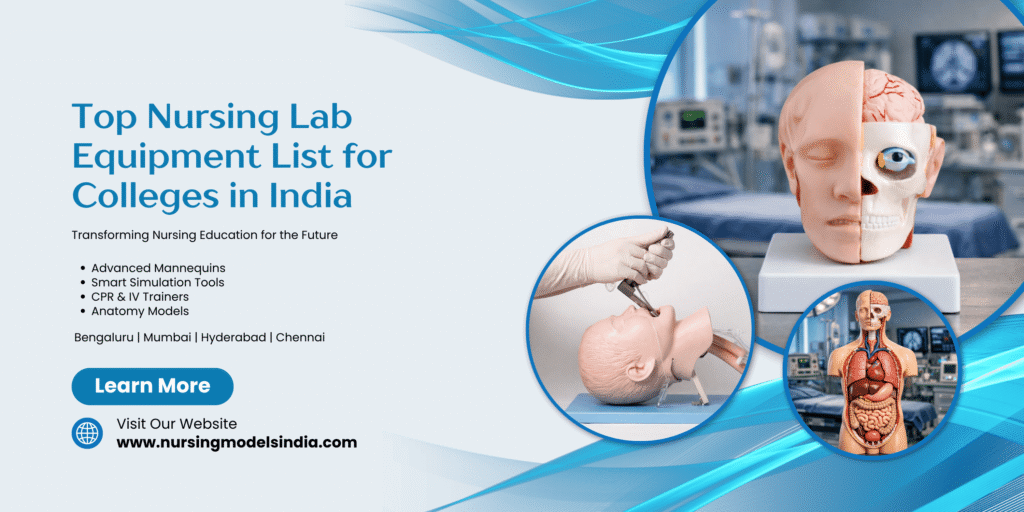
Healthcare education in India is evolving fast—and nursing colleges across Karnataka, Maharashtra, Telangana, and Tamil Nadu are at the center of this transformation. Today’s students don’t just study—they simulate, practice, and perform before entering real hospitals. That’s why having the right Medical Training Mannequin is no longer optional; it’s the foundation of modern training. Along with this, upgraded Nursing Skills Lab Equipment is helping institutions create real-world clinical environments inside classrooms. Why Modern Nursing Labs Are a Game-Changer Gone are the days of basic training. In 2026, nursing labs are becoming mini-hospitals equipped with smart tools and simulation systems. Colleges in cities like Bengaluru, Mumbai, Hyderabad, and Chennai are adopting advanced setups to: Improve hands-on learning Reduce clinical errors Boost student confidence Meet INC and global standards Students now learn by doing—not just reading. Must-Have Nursing Lab Equipment (Trending List) 1. High-Fidelity Medical Training Mannequins This is the star of every lab. A medical training mannequin can simulate: Heartbeat, breathing, and pulse Emergency conditions like cardiac arrest Real-time patient responses Advanced models even connect with software to track student performance. 2. Smart Injection & IV Training Models Precision matters in nursing. These tools help students master: IV insertion Drug administration Blood sampling Widely used across Maharashtra and Tamil Nadu, these are essential for skill accuracy. 3. CPR Training Systems with Feedback Modern CPR kits now give real-time feedback on compression depth and speed—making training far more effective. 4. Anatomy Models with Visual Learning From skeletons to organ systems, these models now come with color-coded and digital support, making complex concepts easy to understand. 5. Fully Equipped Patient Care Units Simulation wards include: Adjustable beds Oxygen supply setup Emergency crash carts Colleges in Karnataka and Telangana are rapidly adopting these setups to mirror hospital environments. 6. Obstetrics & Neonatal Simulation Models These are crucial for maternity training: Childbirth simulators Fetal monitoring models Newborn care manikins 7. Pediatric Training Mannequins Specialized for infant care, these tools help students practice delicate procedures safely. 8. Diagnostic & Monitoring Equipment No lab is complete without: BP apparatus Stethoscopes Glucometers ECG simulators These tools build the foundation of patient assessment skills. State-Wise Trend: Where Demand is Growing Fast Karnataka Bengaluru is leading in simulation-based nursing education, with colleges investing in high-end labs. Maharashtra Mumbai & Pune institutions are focusing on advanced and digital lab equipment for better training outcomes. Telangana Hyderabad is seeing a surge in smart nursing labs integrated with technology. Tamil Nadu Chennai & Coimbatore colleges are known for adopting practical-focused education systems with modern tools. Why Colleges Are Upgrading Now Midway through training, students working on medical training manikins gain confidence in handling real-life emergencies. This hands-on approach, supported by advanced nursing skills lab equipment, ensures they are job-ready from day one. Key benefits: Better placement opportunities Higher student enrollment Strong institutional reputation Compliance with latest guidelines Smart Tips Before Setting Up a Lab If you’re planning a nursing lab setup, focus on: Latest technology (not outdated models) Multi-purpose equipment Long-lasting and durable materials Trusted suppliers A smart investment today means better results for years. Future of Nursing Labs in India The next big thing? AI-based simulation Virtual Reality (VR) training Remote monitoring systems India is moving towards tech-driven healthcare education, and early adopters will lead the market. Conclusion Nursing education is no longer limited to textbooks—it’s about real-world readiness. A modern lab equipped with a medical training mannequin allows students to practice, fail, and improve in a safe environment. Along with this, high-quality nursing skills lab equipment ensures institutions in Karnataka, Maharashtra, Telangana, and Tamil Nadu stay ahead in delivering practical, industry-focused education. The future belongs to colleges that invest in skills, simulation, and smart learning.

Top Nursing Lab Equipment List for Colleges in India (2026 Trend Guide) Read More »

bams-lab-equipment

Top BAMS Lab Equipment Suppliers in India (Cost & Requirements)

Establishment of a BAMS laboratory is among the foremost processes to any Ayurvedic college that seeks to provide quality education and be in line with the regulations. Regarding the necessary equipment to build a complete operational laboratory, every single piece of equipment matters, starting with those that form the basic part of the laboratory to the ones that are department-specific. It is also important to select the appropriate supplier and this will guarantee quality, compliance and long-run reliability. This guide will discuss the best points when choosing to purchase BAMS laboratory equipment suppliers in India, as well as the information on costs and their requirements. We will also point out the significance of such core tools as Khalva Yantra which are central in Ayurvedic pharmaceutical studies. Understanding BAMS Laboratory Requirements A standard BAMS lab is not limited to a single room or setup. It includes multiple specialized laboratories such as: Rasa Shastra & Bhaishajya Kalpana Lab Dravyaguna Lab Kriya Sharir Lab Anatomy & Physiology Lab Each lab requires specific instruments and equipment as per academic and regulatory guidelines. Colleges must ensure that all equipment meets the required standards to avoid compliance issues during inspections. Importance of Choosing the Right Equipment Supplier Selecting a reliable supplier is critical for the success of your laboratory setup. A professional supplier does more than just provide equipment—they offer complete support, including planning, customization, and installation. Top suppliers typically provide: High-quality and durable equipment Complete lab setup solutions Compliance with guidelines Installation and after-sales support Working with experienced suppliers ensures that your lab is set up efficiently and meets all academic requirements. Key Equipment Required in BAMS Laboratories 1. Rasa Shastra Lab Equipment This is where Ayurvedic medicines are prepared. The most important tool in this lab is the khalva yantra, which is used for grinding and mixing herbal and mineral substances. Other equipment includes: Heating devices Pulverizers Storage containers 2. Dravyaguna Lab Equipment Includes: Microscopes Herbarium sheets Storage units 3. Kriya Sharir Lab Equipment Includes: Charts and models Diagnostic tools 4. Anatomy Lab Equipment Includes: Skeleton models Dissection tables Specimens Cost of BAMS Lab Setup in India The cost of setting up a BAMS lab depends on: Number of departments Equipment quality Customization Installation support Generally, costs can range from moderate to high depending on the level of setup. Even traditional tools should be chosen carefully to ensure durability and proper functionality. What to Look for in a BAMS Equipment Supplier Before choosing a supplier, consider: Experience in BAMS lab setups Turnkey solutions Customization options Compliance with guidelines Strong after-sales support Why Quality Equipment Matters High-quality equipment ensures: Better practical learning Accurate results Long-term cost savings Final Thoughts The establishment of a BAMS lab is a serious matter that needs proper planning, quality equipment, and the correct supplier. Basic tools to the instruments that are highly specific to the lab such as the Khalva yantra are all part of assembling a quality and conforming laboratory. Colleges must never work with inexperienced suppliers that only provide partial setup solutions as they will not be successful in the long run. Frequently Asked Questions (FAQs) 1. What is the cost of setting up a BAMS lab in India? The cost of a BAMS lab depends on equipment quality, number of departments, and customization. It can vary from a basic setup to a fully advanced laboratory. 2. Which labs are required in a BAMS college? A standard BAMS lab setup includes Rasa Shastra, Dravyaguna, Kriya Sharir, and Anatomy labs, each with specific equipment requirements. 3. How to choose the best BAMS laboratory equipment supplier? Look for suppliers with experience in BAMS lab setup, who offer turnkey solutions, quality equipment, and after-sales support. 4. Why is Khalva yantra important in Ayurvedic labs? The Khalva yantra plays a crucial role in preparing Ayurvedic medicines by ensuring proper grinding and blending of herbal and mineral substances.

Top BAMS Lab Equipment Suppliers in India (Cost & Requirements) Read More »

CONTACT US